

AUSTRALIA'S MUSICAL CANVAS IN SCHOOLS
Bespoke HSC Music workshops with specialist performers, composers and educatorsEvery HSC Music class is different. The repertoire, instruments, students, strengths and areas requiring additional support will vary from one music department to another. Australia's Musical Canvas in Schools gives Heads of Music and program coordinators access to specialist performers, composers and educators who work collaboratively with the school to create workshops around the students actually in the room. Using the Australia's Musical Canvas framework, the programme brings together performance, composition, analysis and contemporary Australian repertoire — connecting areas of HSC Music that are often approached separately. Students work with musicians who have commissioned, premiered, recorded and toured this repertoire; collaborated directly with Australian composers; and understand how the same music can function in the classroom, examination room, recording studio and on the professional concert stage. The full AMC experience can be delivered across three days, or its individual elements can be adapted into workshops, masterclasses and specialist sessions to complement the school's existing teaching programme, student repertoire, compositions and assessment schedule. This is not a fixed school incursion. It is specialist HSC support built around your students and your music department.
|
Watch above video to see Vov Dylan and Margaret Brandman introduce highlights from the suite "La Vida Apasionada"
|



THE HSC CHALLENGE
For HSC Music students, performance, composition and analysis are interconnected parts of their musical development. In practice, however, these areas can easily become separate streams of preparation.
A student may be preparing contemporary Australian repertoire for performance, developing an original composition and learning to respond to unfamiliar music through Question 4 — without always having the opportunity to explore how those skills inform one another.
Australia's Musical Canvas brings those elements together.
Performance
Students work on contemporary Australian repertoire with professional performers who understand the music from both an artistic and educational perspective. Interpretation, technique, stylistic understanding, ensemble skills and communication are explored in the context of the repertoire students are actually preparing.
Composition
Working directly with composers and performers allows students to examine composition from both sides of the music stand. They can explore how an idea develops into a finished work, how notation translates into performance, and how practical decisions about instrumentation, technique and musical communication affect the result.
Students' own compositions can also become part of the workshop, allowing discussion and feedback to respond directly to the work they are developing.
Analysis & Question 4
Rather than treating analysis as an abstract exercise, students examine music with people who have performed, recorded, commissioned or worked directly with the composers represented.
Musical concepts can therefore be connected with interpretation, compositional intention, historical and artistic context, and the practical decisions involved in bringing a score to performance.
The result is not three separate workshops in performance, composition and analysis. It is an opportunity for students to understand how each informs the others.
For schools outside NSW, elements of the programme can also be adapted for VCE and other senior secondary music programmes.
WHY AUSTRALIA'S MUSICAL CANVAS IS DIFFERENT
The strength of Australia's Musical Canvas lies in collaboration.
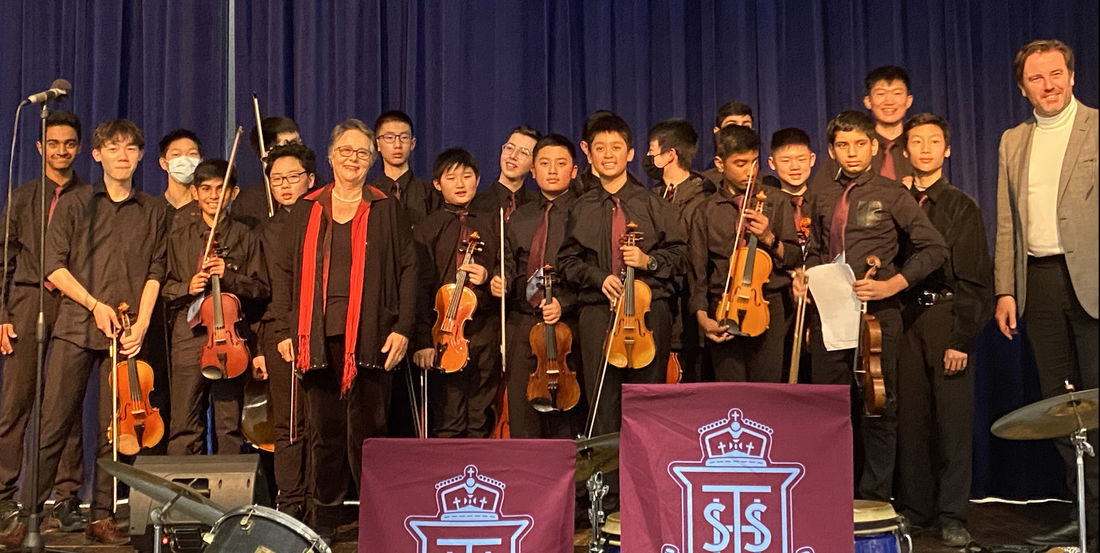
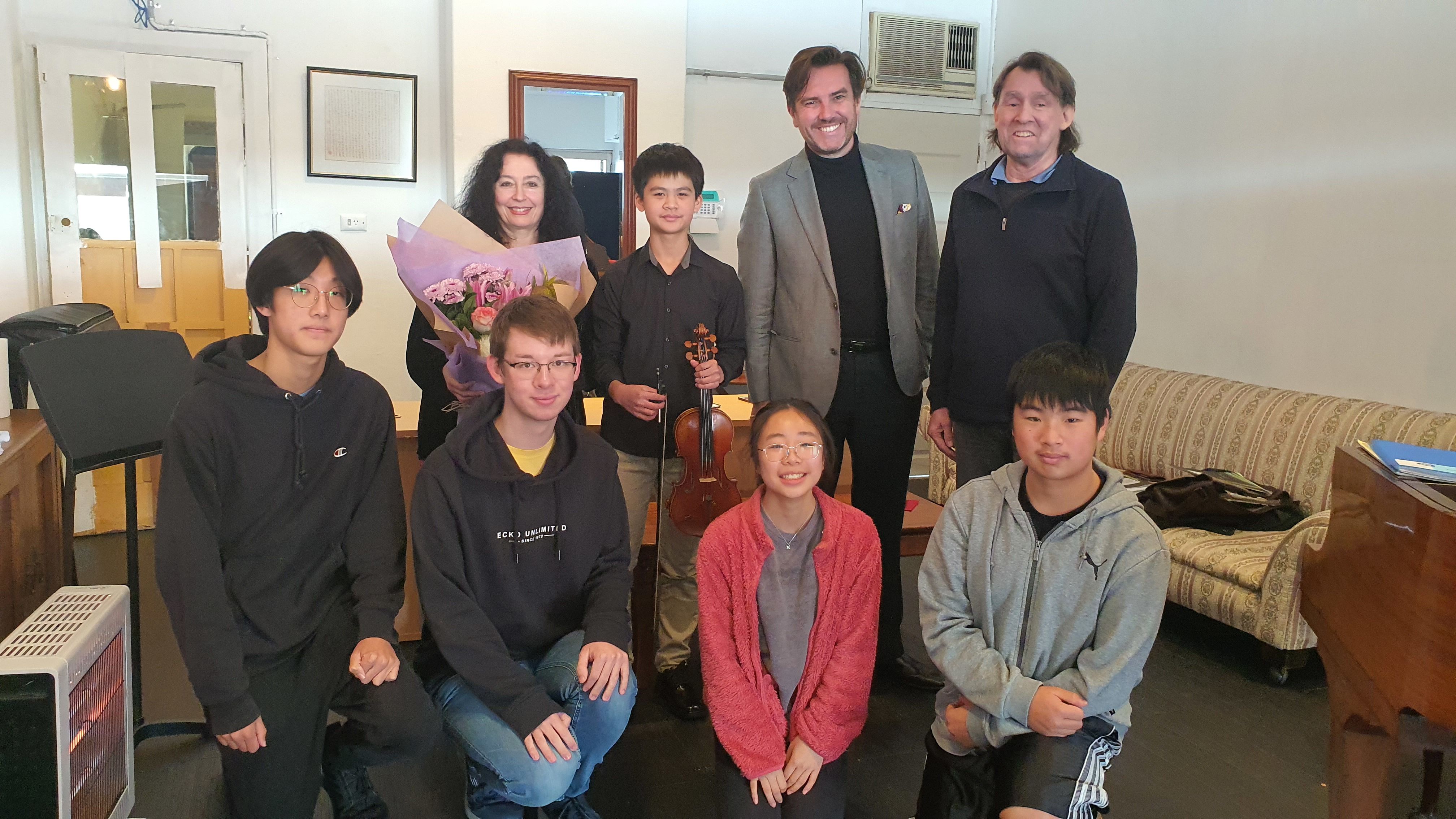
The specialists who deliver the programme do not work independently of one another. They perform together, collaborate directly with composers, commission and premiere new works, make recordings, develop educational resources and take Australian repertoire onto professional concert stages.
This gives students access to perspectives that are difficult to gain from the score alone.
The performers are familiar not only with the works they have recorded and premiered, but with many of the composers and other works students may encounter in their HSC studies. They can offer direct insight into musical approaches, influences, inspiration, historical context, interpretation and the practical relationship between composer and performer.
Similarly, a composer can discuss why something was written a particular way while the performer can demonstrate what that decision means in practice. A question about analysis can become a discussion about interpretation; a performance issue can reveal something about composition; and a student's own composition can be considered from the perspective of the musicians who may eventually have to perform it.
Music That Works Beyond the Classroom
There is another important distinction.
The Australian repertoire at the centre of AMC has not been assembled solely because it satisfies educational criteria. It has also been performed professionally, recorded, broadcast, toured and heard by general audiences.
AMC projects have produced No. 1 classical recordings, received regular classical radio programming and taken contemporary Australian works into professional concert programmes alongside established classical and crossover repertoire.
For students, this provides an important perspective on what happens after the HSC.
The question is not only:
How should I perform or analyse this work for an examination?
It can also become:
Why does this music connect with an audience, where could I programme it, and how might it become part of my repertoire as a musician?
Australia's Musical Canvas therefore connects education with current professional musical practice — giving students access to people who are not simply teaching the repertoire, but actively participating in its creation, performance and continuing development.
A PROGRAMME BUILT AROUND YOUR STUDENTS
No two HSC Music cohorts are the same, and Australia's Musical Canvas is not delivered as a fixed programme that every school receives in the same way.
Before the workshops, the AMC team works with the school's Head of Music or program coordinator to understand the students, instruments, repertoire, compositions, ability levels, assessment schedule and areas in which specialist input would be most valuable.
The programme can then be shaped around those needs.
Students may bring the repertoire they are already preparing, including works by Australian composers outside the AMC collection. Compositions in progress can be examined with a composer and professional performers. Performance sessions can concentrate on individual interpretation, ensemble work, technical challenges or preparation for assessment. Analysis sessions can be directed towards the concepts and skills the faculty most wants reinforced.
The Complete AMC Experience
The full programme is designed across three days, allowing performance, composition and analysis to develop together and giving students time to apply ideas between sessions.
Within that framework, schools can also select individual elements or combine them into shorter programmes, including:
- specialist performance masterclasses;
- composition workshops and individual feedback;
- Question 4 and musical analysis sessions;
- contemporary Australian repertoire exploration;
- composer–performer workshops;
- ensemble coaching and interpretation;
- HSC performance preparation; and
- live demonstrations and performances by AMC artists.
Individual sessions can stand alone, while combinations can be designed to address particular faculty priorities.
The framework belongs to AMC. The programme delivered in the classroom belongs to the needs of that particular school.
Working With Your Existing Teaching Programme
AMC is not intended to replace the work already being undertaken by classroom teachers.
It provides access to specialist knowledge, professional performance experience and direct composer–performer collaboration that can be brought into the school's existing HSC programme at the point where it will be most useful.
That might mean strengthening a particular area before assessment, working intensively with several students on their compositions, exploring unfamiliar Australian repertoire, preparing performances, or using one piece of music to connect performance, composition and analysis in a way that can then be continued by the classroom teacher.
The objective is to leave both students and faculty with material they can continue using after the specialists have left the room.
THE COMPLETE THREE-DAY AMC EXPERIENCE
The complete Australia's Musical Canvas experience allows students to move between composition, performance and analysis across three connected days, with each stage informing the next.
The precise content is adapted to the participating students and their school's priorities, but the full programme can be structured around the following framework:
DAY 1 — COMPOSITION, CONTEXT & ANALYSIS
Students explore contemporary Australian music from the inside out.
Working with a composer and AMC performers, they examine how musical ideas are developed, structured and communicated, connecting the composer's intentions with what ultimately happens in performance.
Sessions can include:
- analysis of contemporary Australian works using HSC musical concepts;
- Question 4 strategies using live music rather than recordings alone;
- discussion of inspiration, context and compositional process;
- examination of scores alongside live performance;
- student composition workshops and feedback; and
- practical discussion of writing effectively and idiomatically for instruments.
Where appropriate, students' own compositions become working material for the session.
DAY 2 — PERFORMANCE & INTERPRETATION
The focus moves from understanding the score to bringing it to life in performance.
Students work directly with professional performers on repertoire they are preparing for the HSC, including Australian works from within or beyond the AMC collection.
Sessions can explore:
- interpretation and musical communication;
- technical and stylistic challenges;
- ensemble playing and collaboration;
- performer–composer relationships;
- preparing repertoire for HSC assessment;
- communicating character and musical intention to an audience; and
- individual or group masterclasses.
The objective is not to impose a single interpretation, but to give students the knowledge and tools to make informed musical decisions of their own.
DAY 3 — FROM THE CLASSROOM TO THE STAGE
The final day brings the different elements together through rehearsal, ensemble work and performance.
Students apply what they have explored in composition, analysis and interpretation, working alongside professional musicians and, where appropriate, composers.
The day can culminate in a live concert or presentation involving students and AMC artists, giving participants the opportunity to experience contemporary Australian repertoire as something intended not simply for assessment, but for an audience.
This final stage reinforces one of the central ideas behind Australia's Musical Canvas:
music studied in the classroom can become music carried into a performer's wider repertoire.
THE THREE DAYS ARE A FRAMEWORK, NOT A REQUIREMENT
Schools do not need to undertake all three days to access the programme.
Each day can be adapted, individual components can be presented as stand-alone workshops, or elements from different days can be combined into a programme designed around a school's particular students and HSC priorities.
[DISCUSS A BESPOKE PROGRAMME FOR YOUR SCHOOL]
MEET THE SPECIALISTS
Australia's Musical Canvas brings students into direct contact with musicians whose work spans professional performance, composition, recording and education.
The value lies not simply in the individual experience of each specialist, but in the fact that they work together. They have performed and recorded together, developed repertoire with Australian composers and understand the music from complementary perspectives.
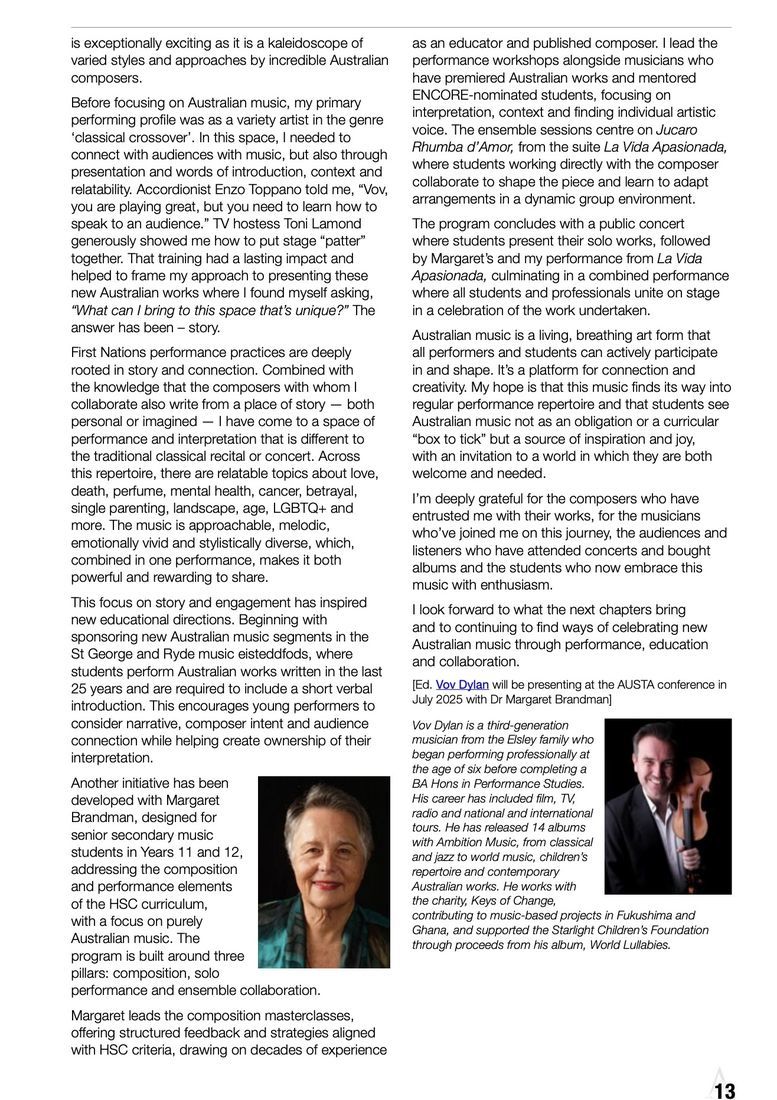
VOV DYLAN
Violinist | Recording Artist | Educator
Vov Dylan brings more than two decades of teaching experience together with an international performing and recording career.
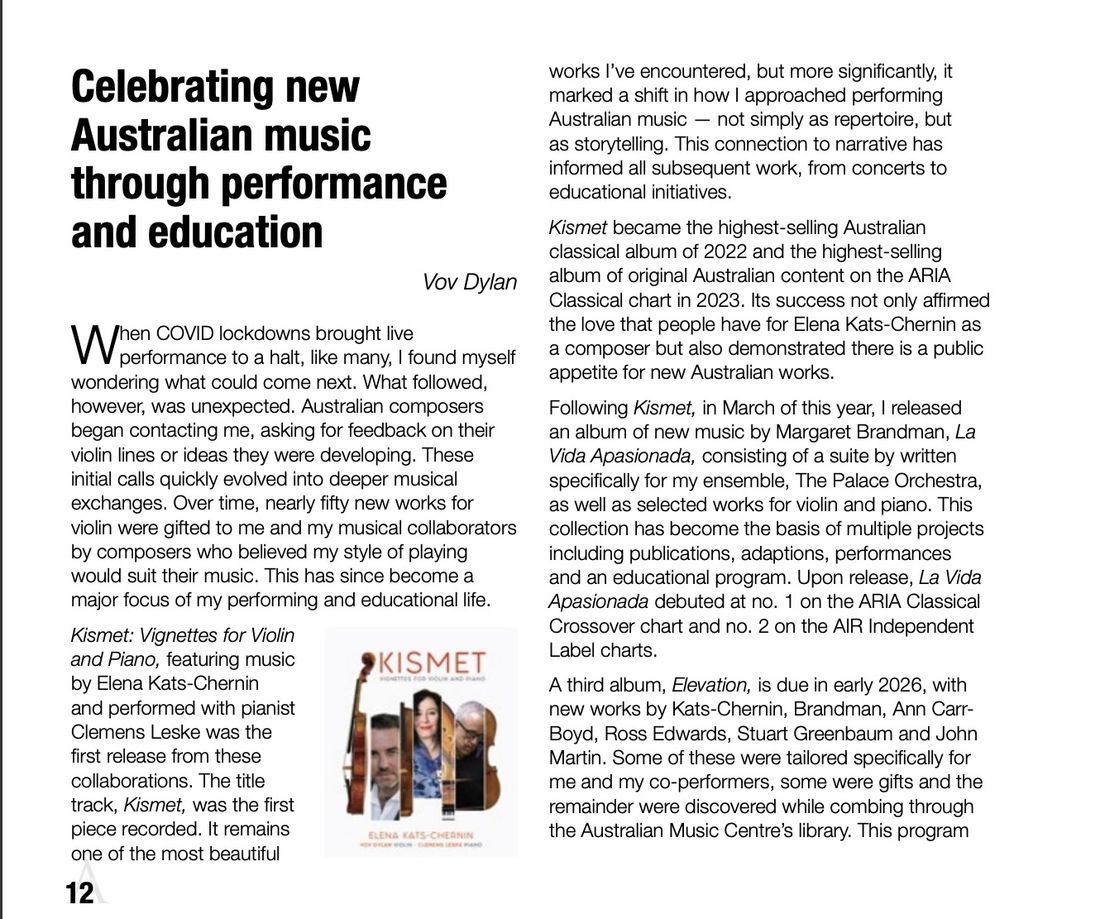
His work with contemporary Australian music includes commissioning, premiering, recording and touring new repertoire, as well as working directly with composers on interpretation and the practical development of works for performance. His recordings Kismet and La Vida Apasionada have achieved significant ARIA chart success, demonstrating that contemporary Australian music can have both artistic and broader audience appeal.
As an educator, Vov works extensively with HSC and advanced violin students. His students' outcomes include ENCORE nominations, tertiary placements and advanced examination results, while his teaching has also extended internationally through educational programmes including Keys of Change.
His work with students also connects performance with composition. Young violinist and composer Andrew Dharma, for example, has undertaken multiple workshops with Vov exploring how his compositions can be made effective, idiomatic and practical for performers, alongside developing his own performance of the works.
Within AMC, Vov brings the perspective of the performer, educator and curator: how a work functions technically, how it communicates with an audience, and how it can move from educational repertoire into a musician's continuing performance life.
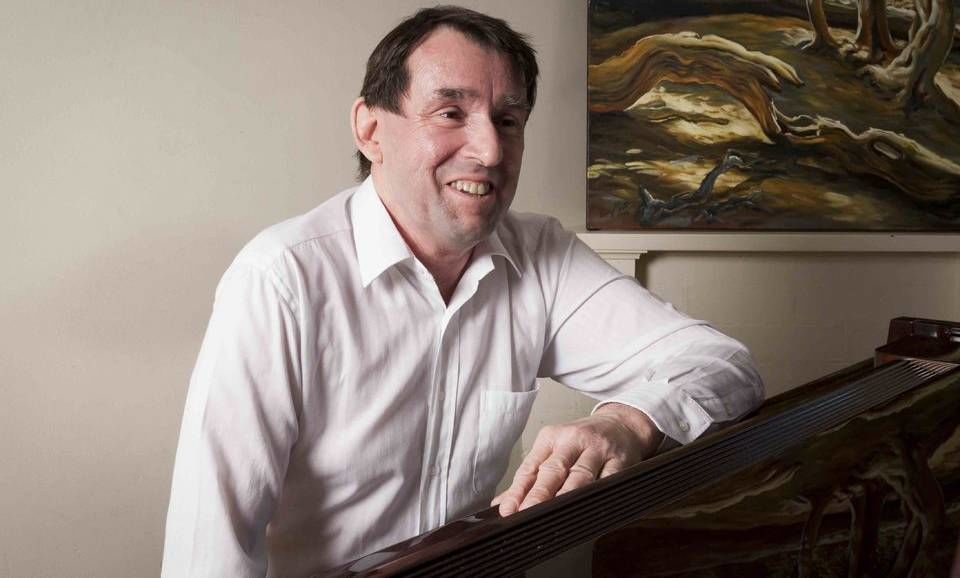
MARGARET BRANDMAN
Composer | Pianist | Educator
Margaret Brandman brings the composer's perspective directly into the classroom.
An established Australian composer, pianist and educator, Margaret has written extensively across instrumental, vocal and ensemble repertoire. Her long collaboration with Vov has included the creation and development of new Australian works specifically intended to combine musical substance, accessibility and performance potential.
Their collaboration resulted in the La Vida Apasionada collection, with works commissioned and introduced by Vov and subsequently performed, recorded and adapted for other instrumental combinations.
For students, working directly with Margaret provides an opportunity to move beyond analysing a completed score. She can explore where musical ideas originate, why particular compositional decisions were made, how works develop through collaboration with performers, and how notation ultimately becomes sound.
Student compositions can also be examined from the perspective of someone who understands both professional composition and music education.
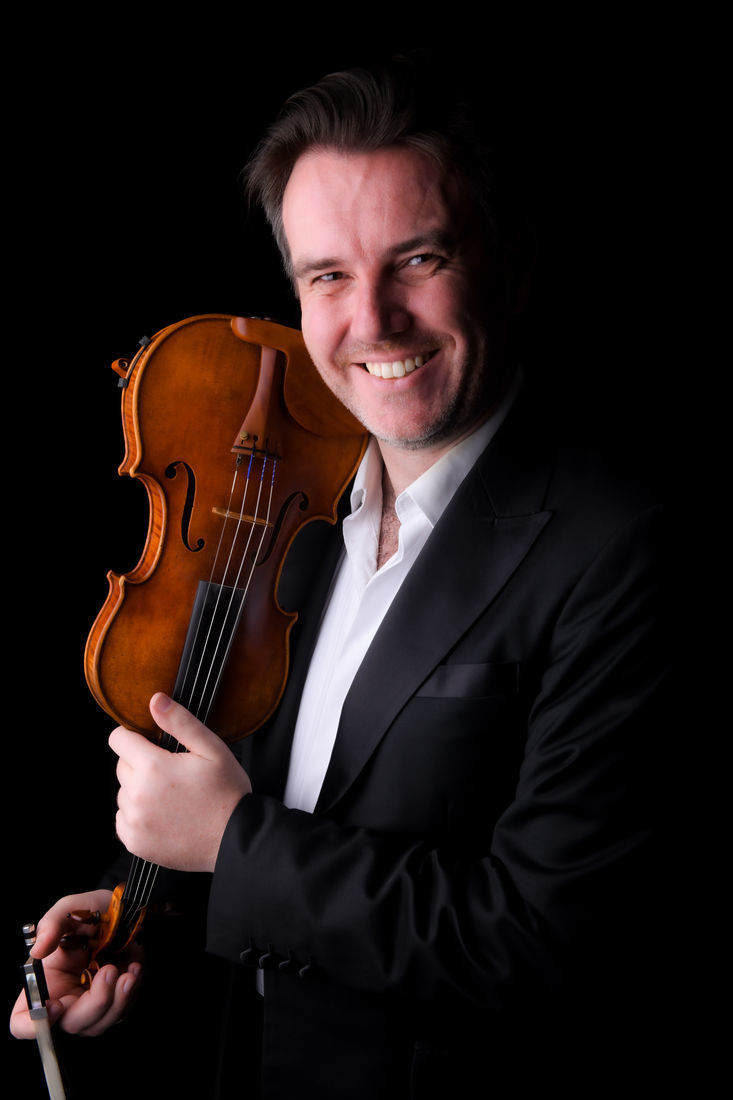
JOHN MARTIN
Pianist | Composer | Educator
John Martin brings the combined perspective of composer, collaborative pianist and professional performer.
His work with Vov includes the development and performance of contemporary Australian repertoire and the Elevationproject, giving students access to a musician who understands both sides of the composer–performer relationship.
As a pianist and collaborator, John can demonstrate how interpretation develops between musicians: balance, phrasing, ensemble, communication and the decisions that transform individual parts into a complete performance.
As a composer, he can also work with students on the relationship between the idea on the page and its practical realisation — particularly the questions performers ask when encountering new music.
THE COLLABORATION IS THE POINT
Students are not meeting three specialists who happen to appear on the same programme.
They are working with musicians who collaborate with one another professionally.
A composer can explain an intention and a performer can demonstrate its practical consequence. A performance question can become an analytical discussion. A student's composition can be considered by both composer and performer. And repertoire can be discussed not simply as something to prepare for the HSC, but as music these specialists actually perform, record and programme professionally.
That interaction is at the centre of the Australia's Musical Canvas in Schools experience.

WHAT YOUR SCHOOL RECEIVES
Australia's Musical Canvas is designed to leave the school with more than the experience of the workshops themselves.
The resources provided are determined by the programme developed with the school, but may include:
- specialist workshops and masterclasses with the participating AMC performers, composers and educators;
- live performance and demonstration of contemporary Australian repertoire;
- individual performance coaching using repertoire students are already preparing;
- composition feedback, including practical input from both composer and performer perspectives;
- HSC analysis and Question 4 work using live and recorded repertoire;
- scores and musical materials for selected Australian works, where licensing permits;
- performance and analysis notes to support continued classroom study;
- ensemble coaching and collaborative performance opportunities;
- professional accompaniment where incorporated into the programme;
- opportunities for faculty to observe, participate and continue the approaches explored after the workshops; and
- where the full programme is undertaken, the option to work towards a concert or presentation involving students and professional artists.
SUPPORTING THE WORK ALREADY HAPPENING IN YOUR MUSIC DEPARTMENT
The intention is not to arrive with a separate curriculum that disappears when the workshops finish.
Where possible, AMC works with the repertoire, compositions and musical concepts already being studied by participating students. Resources and workshop content can then become material that teachers continue to draw upon throughout the students' HSC preparation.
Faculty are encouraged to identify particular students, repertoire or areas of the programme where additional specialist input would be useful. This might range from a single composition requiring detailed feedback to an entire cohort needing greater confidence with contemporary Australian repertoire or Question 4.
The aim is for the programme to add specialist depth to what your faculty is already building.
BUILT TO FIT YOUR SCHOOL
The complete AMC experience can be delivered across three days, but schools may also build a programme from individual sessions or combinations of workshops.
The structure can take account of:
- cohort size and ability;
- instruments represented;
- Music 1, Music 2 and Extension students, where relevant;
- repertoire already under preparation;
- compositions in progress;
- assessment and examination schedules;
- available lesson periods and timetable structure; and
- the particular areas in which the Head of Music would most value specialist support.
The starting point is therefore a conversation with the school's Head of Music or program coordinator, rather than selecting a standard package.
Tell us about your students, what they are currently working on and where specialist input would be most useful. We can then develop an AMC programme around them.
[DISCUSS AN AMC PROGRAMME FOR YOUR SCHOOL]
Frequently Asked Questions
How exactly does this help me teach HSC Question 4 analysis?
Margaret Brandman has developed detailed analysis worksheets based on her work Jucaro Rhumba D'amor, covering chordal structure, compositional development, musical devices, stylistic influences, and all elements required for Question 4.
During the workshop, students hear multiple Australian works performed live, analyse them in context, and receive scores they can later use as additional repertoire for Question 4 study.
What will my students be able to do after this workshop that they couldn’t do before?
Students gain:
- Greater clarity and confidence in their own compositions
- Stronger tools for recognising and describing musical techniques for Question 4
- Improved stylistic understanding in Core Performance
- Greater confidence performing Australian repertoire
Is this closely aligned to the NSW HSC syllabus?
Yes. The program is built specifically around Core Performance, Required Composition, and Question 4 analysis, and adapts as syllabus requirements evolve.
Is this a concert or a practical classroom session?
This is not a concert. It is an interactive, practical HSC teaching session delivered in your classroom.
Is this practical, or will students just sit and listen?
This is a hands-on workshop involving discussion, analysis, masterclasses, ensemble work, and direct interaction with the composer and performers.
How is this different from inviting a guest performer?
This combines live performance with practical teaching tools, analysis methods, and compositional insight that students can immediately apply.
Can this connect directly to the pieces my students are already studying?
Yes. Performance sessions are based on students’ current repertoire. Additional material is provided as enrichment.
Will weaker students understand this?
Yes. The educational approach is designed to be accessible to all students while still offering depth for stronger performers and composers.
Is this suitable for mixed ability levels?
Yes. Ensemble repertoire is arranged from approximately Grade 4 AMEB equivalent through to diploma level.
How much preparation is required beforehand?
Very little. Distributing the worksheets beforehand is helpful. Students should already be working on their performance pieces. Composition students may submit work in advance for feedback. Light rehearsal of the ensemble piece is the only additional preparation. This program can also be used as a reason for students to have a deadline of when to have their core performance and compositions properly underway.
Will this save me teaching time or add to my workload?
It saves time. Teachers receive worksheets and resources that can be used before and after the workshop as part of normal teaching.
How many students can participate?
Ideal workshop size is approx 13 but runs from 6-20 students
Is this more composition-focused or performance-focused?
It is equally focused on both.

Will this help students write better exam responses?
Yes — when students apply the techniques and understanding gained.
Will this help students perform with greater stylistic awareness?
Yes — through direct performance feedback and demonstration in masterclasses.
Will students actually engage, or will they switch off?
Students remain engaged due to the interactive format, variety of presenters, and practical nature of the sessions.
Is this too advanced for teenagers?
No. It is designed specifically for Year 11 and 12 HSC students.
Are the presenters experienced with school groups?
Yes. All presenters have extensive experience in primary, secondary, and tertiary education across public and private sectors.
Will this disrupt my teaching program?
No. The workshop is designed to enhance your program and is scheduled in consultation with your timetable.
Will the presenters understand classroom dynamics and bell schedules?
Yes. The program is structured in consultation with your music department to suit normal school timings.
Questions School Leadership May Ask
Is this enriching or essential?
It is both. It enriches the student experience while directly supporting required HSC outcomes.
How many students benefit?
All participating students benefit. The open masterclass format also allows observation by other students.
Is this inclusive for the whole class?
Yes. The material and ensemble work are designed so all students can participate at their level.
Does this link to assessment outcomes?
Yes. The workshop directly supports assessment criteria across performance, composition, and analysis.
Is this run by educators with proper experience?
Yes. All presenters have tertiary qualifications, extensive teaching experience, and Working With Children clearances.
Will this enhance our school’s music program reputation?
Yes. The presence of specialist educators who are also active performers brings both educational and artistic value.
Practical Planning Questions
Can this be delivered for Year 11 as well?
Yes. The program is designed for both Year 11 and 12 students plus an invitation for younger advanced students
Can our accompanists be involved?
Yes. School accompanists are welcome to participate alongside John Martin.
Can students perform during the session?
Yes. Performance and participation are central elements.
Can this tie into our assessment schedule?
Yes. Timing can be aligned with your assessment calendar.
Can this be booked annually?
Yes, though it is particularly effective on a two-year cycle for Year 11 and 12 cohorts.
Can the workshop be tailored to our repertoire?
Yes. Discussions and masterclasses are built around what students are already studying.
We don’t have enough students studying Music 2 with an Australian work. How can we fill the masterclass component?
Many younger students in the school will be preparing for AMEB examinations. Many List D pieces in AMEB repertoire includes modern Australian works. Students working on these pieces with their private teachers can participate in the masterclass component focused on their AMEB Australian repertoire.
While not for HSC assessment, this still supports their exam preparation and exposes the senior students to more Australian works which contributes to broader Question 4 understanding.
BRING AUSTRALIA'S MUSICAL CANVAS TO YOUR SCHOOL
Every engagement begins with a conversation.
Rather than asking schools to choose from a fixed package, Australia's Musical Canvas works with the Head of Music or program coordinator to identify where specialist input can best support the students and the existing HSC teaching programme.
That conversation might consider the repertoire students are currently preparing, compositions in progress, instruments and ability levels within the cohort, upcoming assessments, areas of the syllabus requiring additional support, and the amount of time available.
From there, an AMC programme can be developed specifically for the school — from a focused specialist workshop or masterclass through to the complete three-day experience.
START THE CONVERSATION
Tell us:
- what year groups and courses are involved;
- approximately how many students would participate;
- what repertoire or compositions they are currently working on;
- which areas of HSC Music you would particularly like to strengthen; and
- any dates or timetable considerations already known.
We can then discuss which combination of performers, composers, workshops and resources would be most useful for your students.
[ENQUIRE ABOUT A BESPOKE AMC PROGRAMME]
Australia's Musical Canvas in Schools can also be adapted for VCE and other senior secondary music programmes.