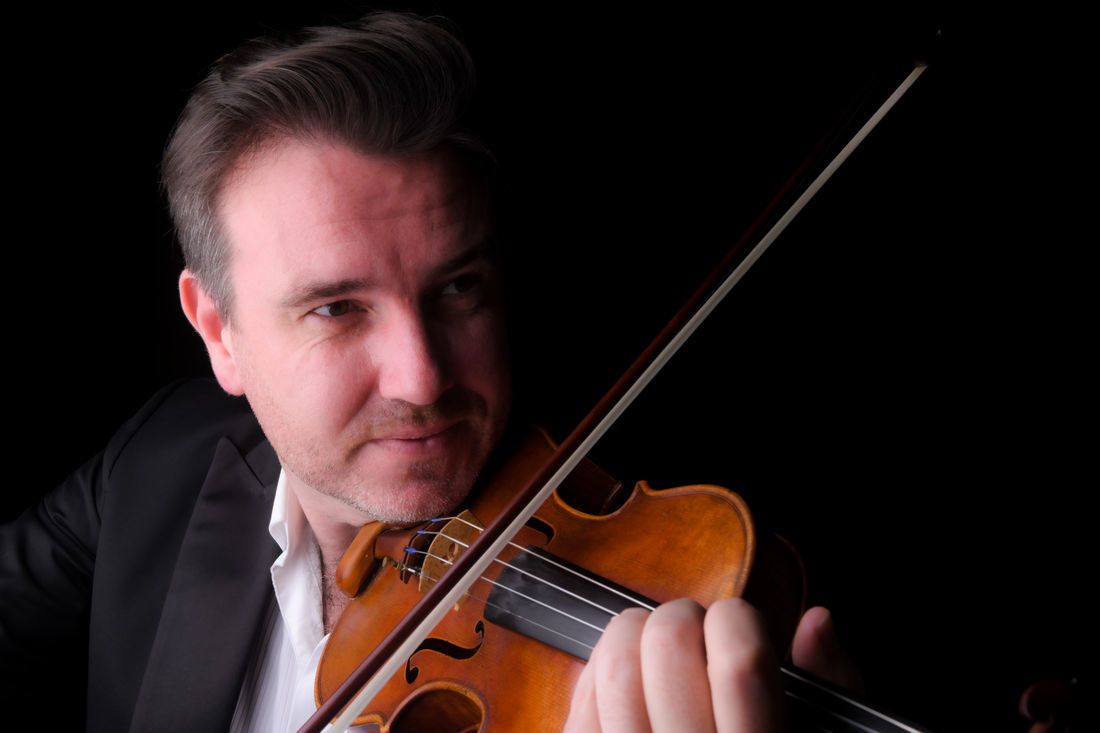

SHORT BIOGRAPHY
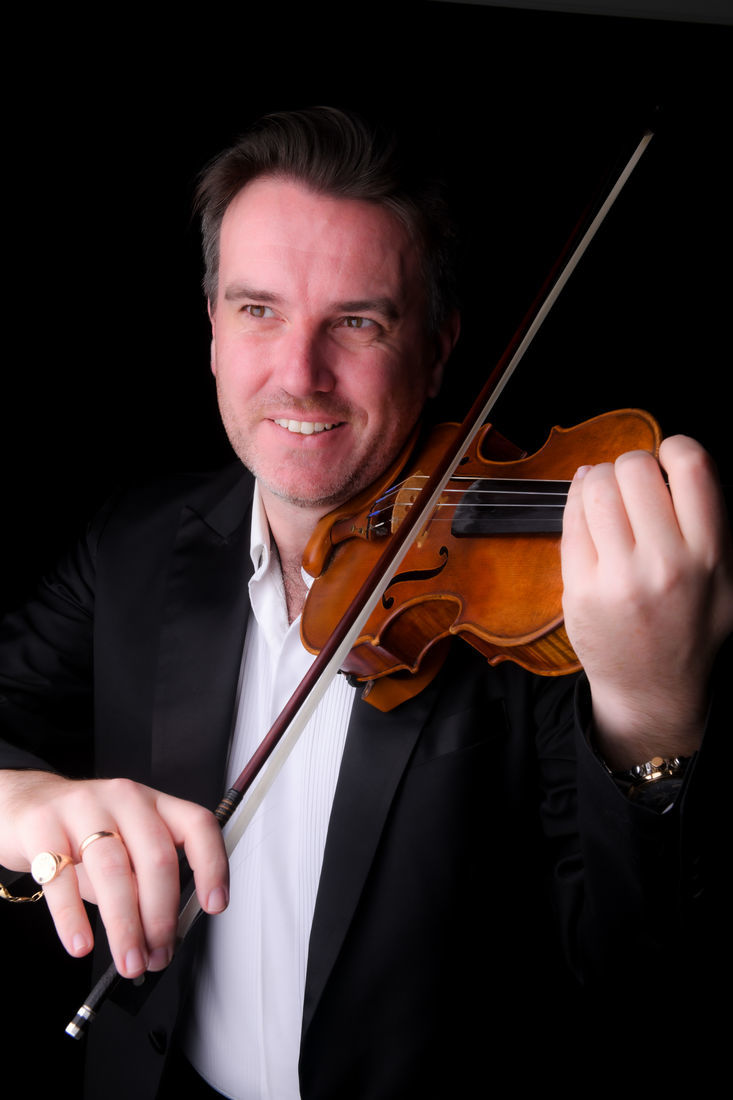
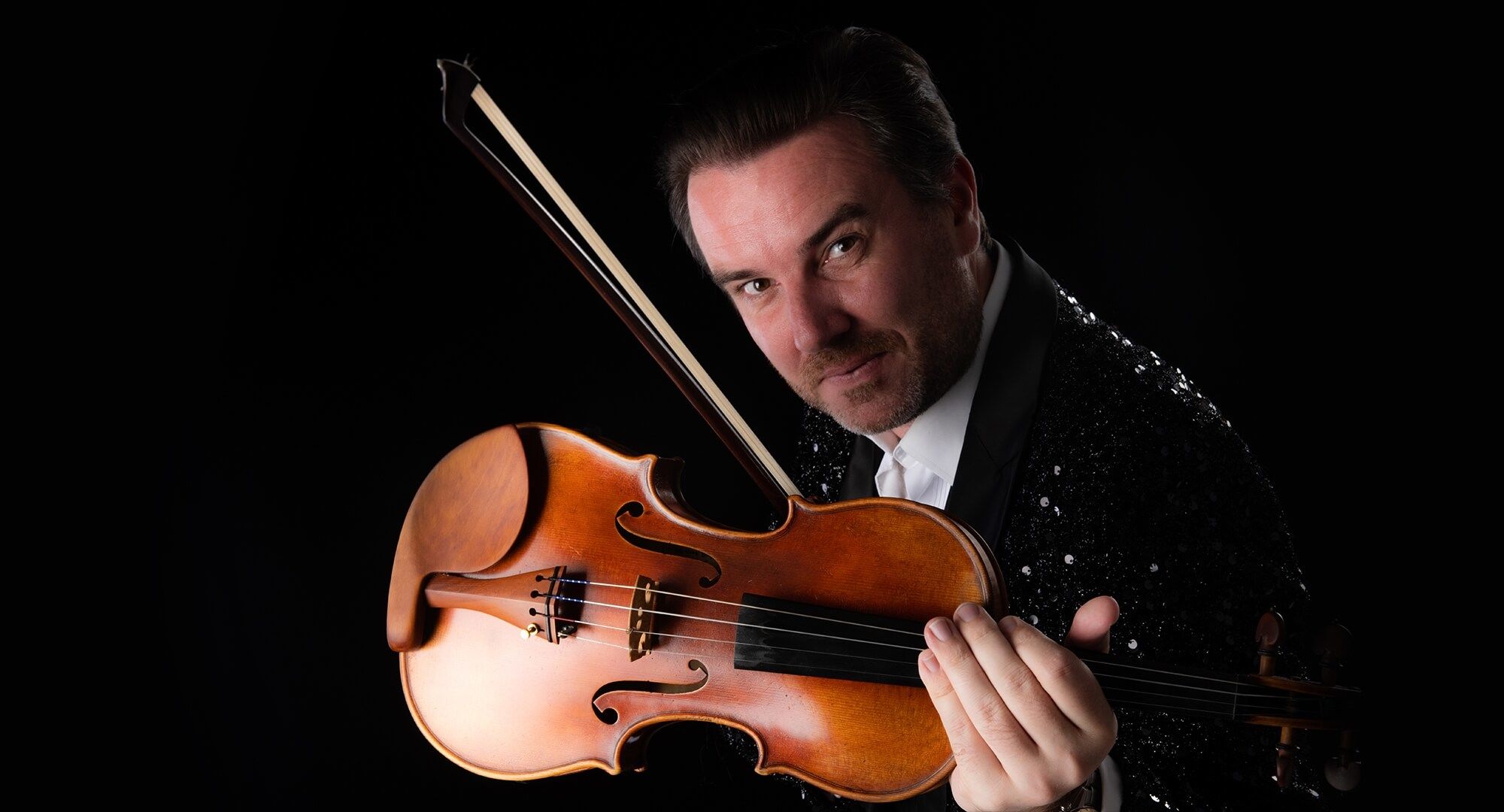
Vov Dylan is one of Australia's more recognisable violinists, known for performances that bring together virtuosity, warmth and an unusually broad musical repertoire. From classical masterworks and contemporary Australian music to salon favourites, world music and popular traditions, his career has taken him to concert halls, theatres and festivals throughout Australia and internationally.
A prolific recording artist, Vov has released sixteen albums and achieved multiple No.1 chart positions. Kismet: Vignettes for Violin and Piano became the highest-selling Australian original-content classical album of both 2022 and 2023, while La Vida Apasionada debuted at No.1 on the ARIA Classical, ARIA Classical Crossover and AIR Classical charts. His performances include sold-out appearances at the Sydney Opera House and international concerts for audiences numbering in the tens of thousands.
Vov is founder and leader of Palace Orchestra and creator of Australia's Musical Canvas, through which he has commissioned, premiered or championed nearly fifty works by Australian composers. He is also an educator and composer, with more than two decades devoted to teaching and mentoring violinists.
Beyond the concert stage, his outreach work has included Keys of Change programmes in Ghana and Japan, while his album World Lullabies was released as a fundraiser for the Starlight Foundation.
Whether playing a newly written Australian work, a classical favourite or a melody audiences have known for a lifetime, Vov approaches each with the same purpose: to tell a story, connect with the audience and make the violin sing.
Detailed Biography
Since his first professional engagement as a child, Vov Dylan has spent nearly four decades building a life in music. Today he is among Australia's more recognisable violinists, with a career spanning performance, recording and education. Performing throughout Australia and internationally, his work encompasses classical repertoire, salon music, world music, theatrical productions and contemporary Australian works, united by a belief that music should connect with people and leave a lasting impression.
A prolific recording artist, Vov has released sixteen albums across a wide range of musical styles. His recordings have achieved both commercial and critical success, including Kismet: Vignettes for Violin and Piano, which became the highest-selling Australian original-content classical album of both 2022 and 2023. The album reached No.1 on the ARIA Classical Chart within three days of release, remained in the ARIA Classical Top 20 for more than thirty weeks and returned to No.1 in January 2024. His 2025 release La Vida Apasionada, featuring the music of Australian composer Margaret Brandman, debuted at No.1 on the ARIA Classical Crossover Chart and No.1 on the AIR Indi Chart. Through his recordings, Vov has sought not only to entertain audiences, but also to create a lasting record of music that deserves to be heard, shared and performed by others.
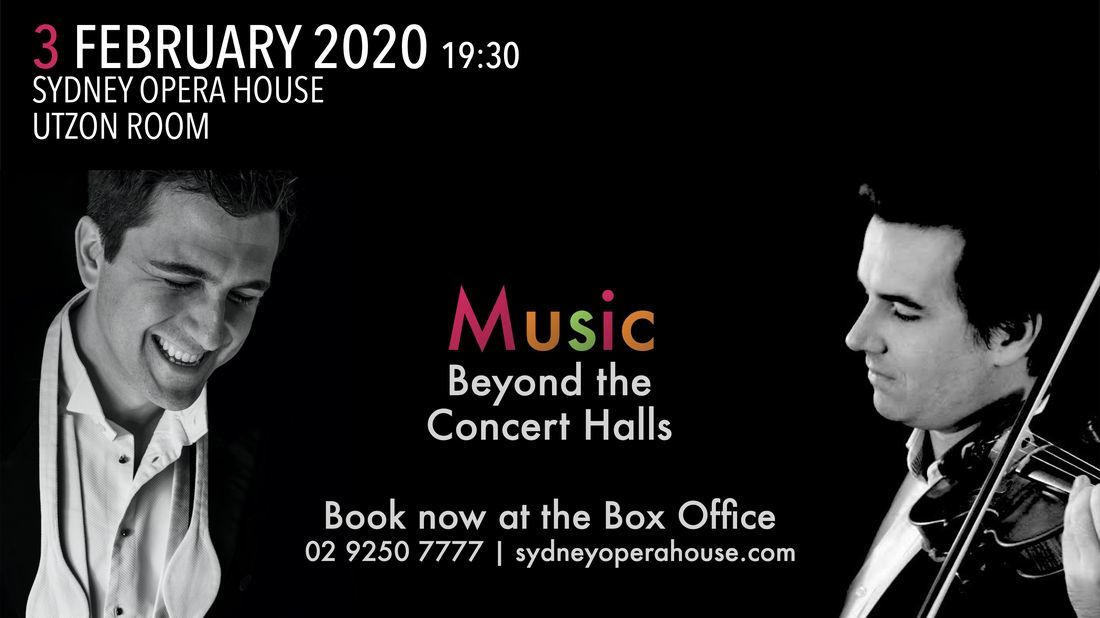
His performing career has taken him from concert halls and theatres throughout Australia to international stages. Equally comfortable performing recital repertoire, large-scale theatrical productions and popular concert programmes, he has developed a reputation for presenting music that is accessible, engaging and rich in variety. Career highlights include sold-out performances — including a solo recital at the Sydney Opera House and the launch concert for Kismet: Vignettes for Violin and Piano — major international festival appearances, collaborations with leading Australian artists and performances for audiences numbering in the tens of thousands. His work has been featured across television, radio and print media and film in Australia and internationally.
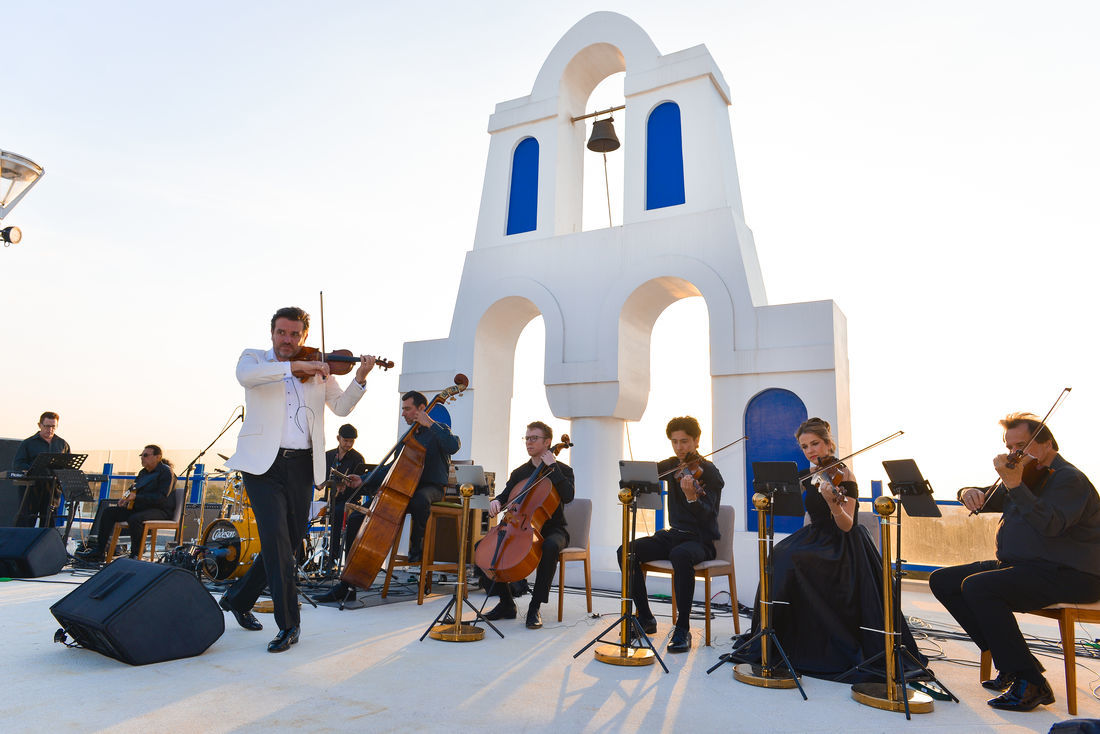
Alongside his solo career, Vov is the founder and leader of Palace Orchestra. A purpose built body that draws inspiration from the great sweet music and salon orchestras of the early twentieth century while maintaining a contemporary performance identity. Featured throughout his recordings and live productions, the ensemble has become a regular part of Vov's national and international performances.
A defining focus of Vov's recent work is Australia's Musical Canvas, a long-term initiative dedicated to performing, recording and promoting Australian music. Through this project he has commissioned, premiered or championed nearly fifty works by Australian composers, helping to create a growing body of repertoire for violin and piano. Collaborations with composers including Elena Kats-Chernin, Margaret Brandman, Ross Edwards, Stuart Greenbaum, Ann Carr-Boyd, John Martin, Hayden Reeder and others have led to performances, recordings and educational initiatives that continue to bring Australian music to new audiences. Major projects within this initiative include Kismet, La Vida Apasionada and the forthcoming recording Elevation.
Alongside championing the work of other composers, Vov has increasingly contributed to the repertoire through his own compositions. These works draw upon influences from classical, salon, world and popular traditions while remaining firmly centred on the expressive possibilities of the violin. Written for performers ranging from advancing students to professional musicians, the catalogue continues to grow through new works inspired by Vov's performing career and the diverse musical influences that have shaped it.
Education has remained a constant throughout his career. Since commencing teaching in 1999, Vov has worked with hundreds of violinists through private tuition, school programmes, ensemble direction, workshops and masterclasses. His students have achieved success in examinations, competitions, tertiary music study and professional careers, while many others have developed a lifelong appreciation of music. Beyond the teaching studio, he has contributed to the wider string community through presentations, workshops, published articles and analytical writing, including work for the Australian Strings Association (AUSTA). His educational activities reflect a commitment not only to developing performers, but also to supporting the ongoing growth of violin teaching and learning in Australia.
Beyond the concert platform, Vov has been actively involved in community and outreach initiatives. Through projects including Keys of Change and the fundraising album World Lullabies, released in support of the Starlight Foundation, he has used music as a means of connection, cultural exchange and positive social impact. Outreach programmes in Ghana, Japan and elsewhere have further reflected his belief that music can create opportunities, build understanding and bring people together.
Through performance, recording, education, composition and Australia's Musical Canvas, Vov Dylan continues to explore the breadth of the violin — from established repertoire and much-loved standards to newly created Australian works. His long-term vision is simple: to share music that audiences value, to create recordings they return to, and to help ensure that the works he champions and creates continue to be performed by peers and future generations.

The longer story that no one knew they wanted to know!
Nice Chap. Doesn’t Screech. Book Again.
I come from a musical family.
My grandfather, Fred Elsley, was a pianist. My grandmother was a pianist. My uncle was a pianist. My aunt was a singer in musical theatre. and most significantly, my father, Evan Elsley, is a violinist.
Music was there in my life from day dot.
My grandfather was playing live-to-air on ABC radio when Prime Minister Menzies interrupted the broadcast to declare the outbreak of World War II. After the war he became Head of Music at Scots College in Sydney.
My father went on to become Director of Strings at numerous private schools throughout Sydney, leading orchestras and introducing Australian works in his own right and forming his own performance company that saw him perform for heads of state, royalty, movie stars and more functions and weddings than most could dream to imagine!
That is the family I grew up in.
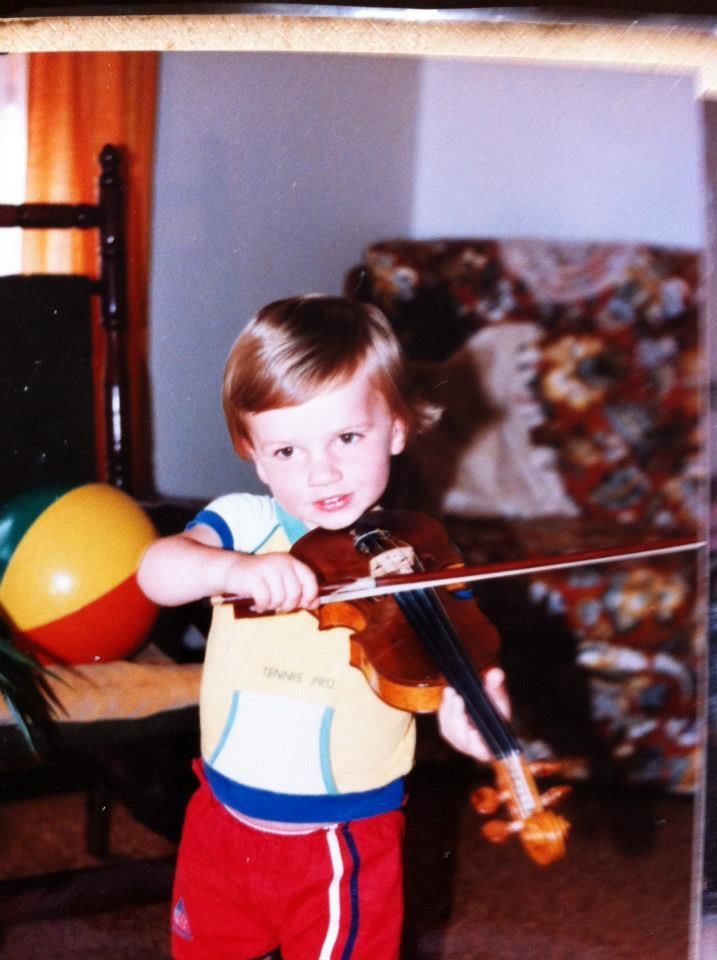
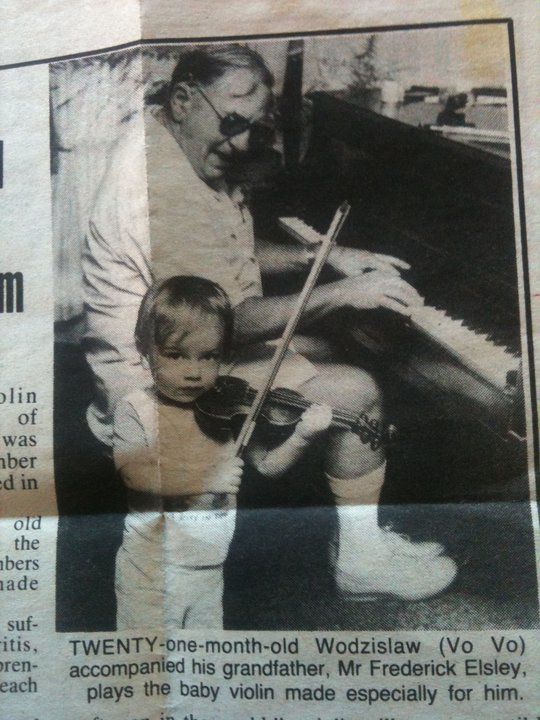
Before I have my own clear memories, there was a newspaper article. Me at 21 months old playing the violin with my Grandfather. I still have that handmade violin hanging on my wall.
He would play a note. I would play a note. Then I would play a note and he would accompany me. It was call and response. It was learning music like a language.
One of my first clear memories of my own is from when I was six, on a family holiday at Terrigal Beach. I woke up before Mum and Dad and was sitting in the hotel room with my music. I was still working out how to read properly. I remember looking at the page and then suddenly it made sense. The dots were no longer just dots. I could see what they were. I picked up the violin and was able to start to play without writing anything in.
The violin was never separate from daily life. Dad gave me lessons before and after school. Grandma would sit at the piano and work through scales with me.
At my primary school there was no string ensemble. So in Year 5 I went to the headmaster and said the school needed an orchestra. He said there was no one to run one, so I said "I can do it". I held auditions, formed an ensemble. It grew and eventually started to perform. It is a matter of some pride for me that the orchestra I started 30 odd years ago, continued after I left and is now one of the biggest string and band programs for primary schools win the area.
Unfortunately, this also brought attention through bullying. I was advised by the school councillor to change schools and not tell anyone I played the violin...... can you imagine that happening today.....?
Ultimately I did change schools for the last part of of Primary school, and I kept playing the Violiin to myself for about 2 weeks. Then the school needed help with a fundraiser for the local senior citizen centre. They asked if anyone could perform. I put my hand up. “I play the violin.”
I never shied away from the Violin as part of my identity ever again.
I was fortunate to receive a music scholarship to Newington College. Here I was exposed to a wealth of experience including chamber ensembles, chamber orchestras and symphony orchestras. In Year 12 I I also had the opportunity to conduct the symphony orchestra with the Largo from Dvořák’s Ninth Symphony.
Ljubo Oblikov was a exceptional mentor at the school. He took me under his wing and formed a piano trio with me. He spoke about nuance, about phrasing, about the singing line inside instrumental playing. That shifted my thinking from soloist to collaborator.
At Sydney University, studying for my Bachelor of Arts, Dad asked me what kind of musician I wanted to be. I said I liked the idea of being a working musician.
His advice was simple: learn three hours of music in every genre. Learn it from memory. Learn it in every key. Learn the lyrics. If someone says a line of text, you should know the tune immediately and be able to match their pitch.
So I memorised constantly. Jazz. Continental repertoire. Standards. Classical. Sometimes from sheet music, sometimes by ear. That skill is one I still practice, and is one that has afforded me the ability to have the career I have had....... ultimately.....If you know the tune, you can work.
In 2004, St Ives Shopping Village gave me my first major job running a full show. That happened because of Toni (who would later become may wife). She heard what the venue was looking for and put my name forward.
It was a Viennese high tea. I wrote every arrangement by hand for a quintet and ballroom dancers. It worked. Within weeks the "Vov Dylan Viennese Orchestra" was born. Over time it eventually became the Palace Orchestra.
As the years went on, the sound of this orchestra settled into what I had been hearing in my head — a modern version of the sweet music orchestras of the 1930s and 40s. String-led. A gentle rhythm section behind. Popular melodies from across genres.
It is not a sound many pursue today. Because of that, I think when we tour or record, the Palace Orchestra has a sound that is distinctly our own.
Glenn Amer has been central to that story. He and I share a similar depth of knowledge across genres. Nearly every recording we have done has started with, “Right. Fifteen tracks of Gershwin. Which ones?” And we just play them.
On stage we mix traditional vaudeville humour with proper musicianship. We don’t take ourselves seriously, but we take the music seriously. We string melodies together. We shift keys. We take requests. It works because the shared knowledge and passion is there.
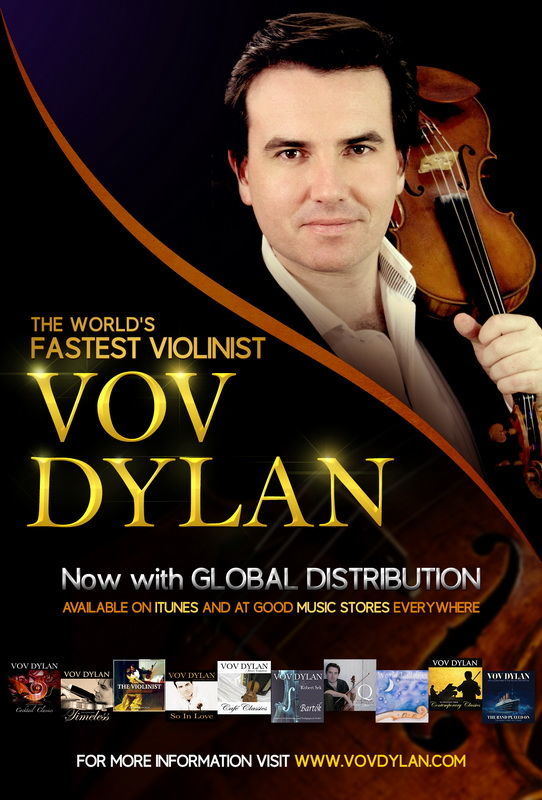
In 2009, Ambition came on board as distributor. It is a label focused on contemporary adult-driven content, and there is no other label like it in Australia. Being on that label was a turning point for my recording career. Since then we have released sixteen albums.
One highlight of this was that when our daughter Avalon was born, I released World Lullabies. Five dollars from every copy went to the Starlight Foundation.
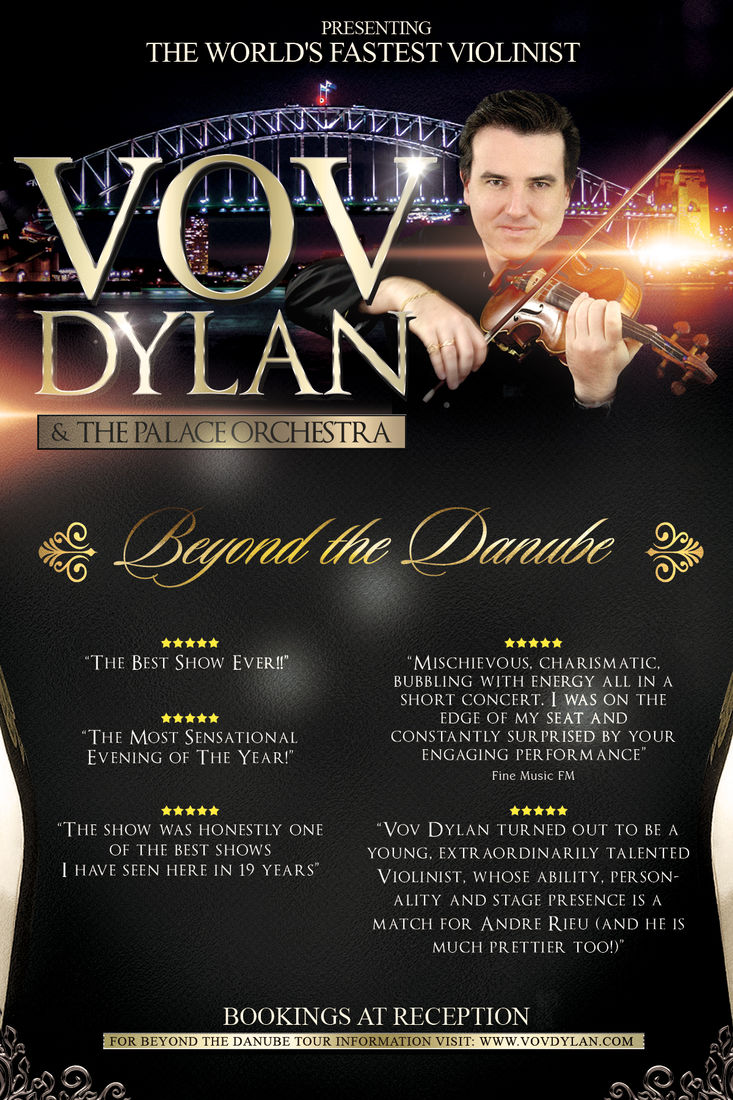
The “world’s fastest violinist” chapter began at Top Ryde Shopping Centre.
I was playing background music for another record attempt — the world’s widest cake. The Australian Book of Records were there. In conversation I asked what it took to attempt Flight of the Bumblebee. They said if you play it fast and correctly, you get it.
They asked if I wanted to try.
I did.
I missed the world record by a couple of seconds. That made me Australia’s fastest violinist.
I went back properly prepared and achieved the world record.
It became a publicity hook. It led to my appearance on Studio 10. During that broadcast, while I was playing, Jono Coleman ran out in a bumblebee suit and circled me. In the spirit of live television, I chased him while still playing. It was clearly humour. It was meant to be fun.
The appearance led to theatre bookings and significant work for the musicians I was employing.
Years later, that moment was reframed online in a way that removed the humour entirely.
When it was released, my social media flooded. There were threats. There were death threats. There were threats toward my daughter.
We installed security. Cameras. Extra lighting. I went to the police. There was nothing that could be done.
I considered retiring the name Vov Dylan and starting again under Wodzislaw Elsley, focusing purely on teaching.
It led to a period of what can be retrospectively diagnosed with "black dog". The darker parts of that period are stories for friends over a drink or two.
What matters is that I came through it - and I came through due to great friends trusting me to be a Violinist.
Panos Karan invited me to perform Franck’s Violin Sonata with him at the Sydney Opera House. Walking onto that stage I was carrying all of it. The fear that something would follow me, or that I would justify the hate that had been sent to me, Instead - nothing of the sort happened, We performed to a standing ovation and a full house, then when I walked off stage I collapsed from the weight of it all.
That concert started a shift. A shift in attitude, repertoire and types of performances.
Around the same time, John Martin and I began looking closely at contemporary Australian repertoire. It started with trying to find material for my students to perform for their core HSC components. There was plenty written, but not many recordings and not much reference material.
So we started with the view to record some great material. But then something bigger happened.
Ann Carr-Boyd dedicated Lullaby to us. Then Elena Kats-Chernin offered Kismet. She played the theme to me over the phone. I got goosebumps.
What began as a student resource grew into Australia’s Musical Canvas. More than fifty works curated. More than fifty premieres to date. Albums including Kismet and La Vida Apasionada reached No. 1 on the ARIA Classical charts. In 2022 and 2023 I was the highest-selling Australian violinist. I have been nominated five consecutive years at the ACE Awards for Instrumental Entertainer of the Year.
The music is now recommended through the Australian Music Centre for HSC usage in New South Wales and Victoria.
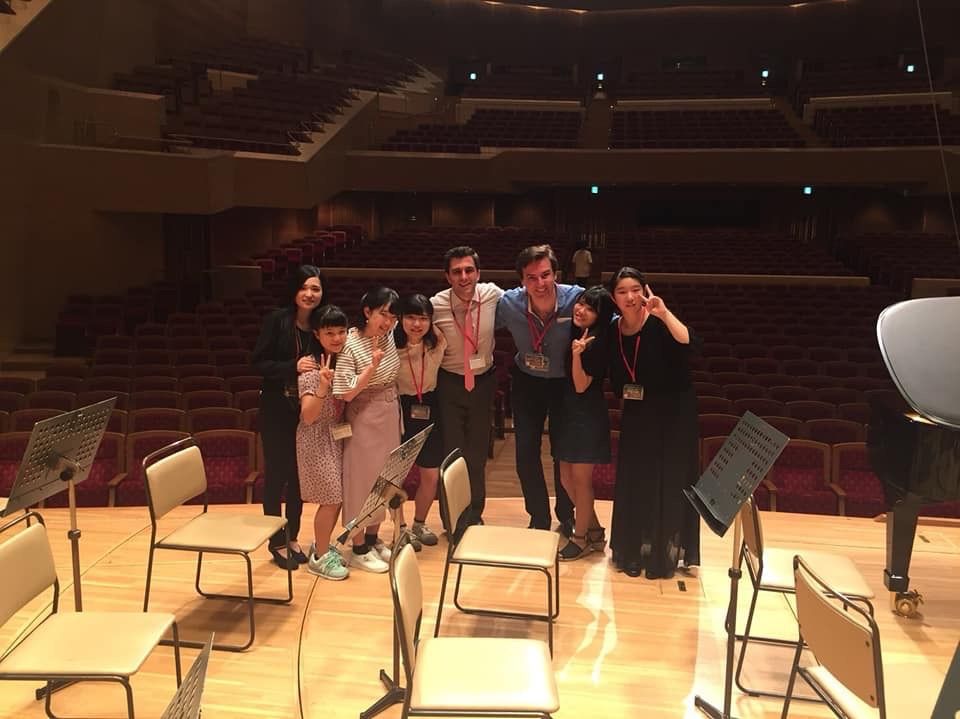
Through Keys of Change I worked in Fukushima, Chennai and Accra. In Ghana we helped establish the first Youth Sinfonietta made up of students predominantly from the foster system. This program not only established an orchestra which is still operating today, but one of the students I have taught online and mentored through all the stages has now completed his Bachelor of Music in performance from the University of Ghana. This one young man and the impact of music is huge. It helped to shift my focus from what is the big concert hall or the applause to the moments that can make a difference in someones life.
Moments and experiences and interactions that matter.
I have worked in dementia wards where the right piece of music has brought someone briefly back into focus. I once played The Way You Look Tonight for a woman who had not spoken coherently for some time. Her daughter was beside her. The song had been played at her wedding decades earlier. As I played, her eyes focused. She recognised her daughter. They spoke. Then she drifted again.
Music can do that.
Those moments carry as much emotional weight as a No. 1 album or a standing ovation.
It is important for me to note that none of this has been done alone.
Glenn Amer has been a constant. John Martin has shaped the Australian repertoire work. Clemens Leske, Enzo Toppano, and all the musicians who have formed the Palace Orchestra over more than twenty years have shaped the sound audiences now recognise.
There are also the countless musicians I have stood beside on ships and in theatres around the world. I would not have the career or reputation I have now if I had not stood shoulder to shoulder with extraordinary musicians globally.
The violin may be a solo instrument. A career never is.
I still practise daily.
Scales. Bach. Etudes. Memorising repertoire. Looking for something new.
If everything stopped tomorrow, I would be at peace with what has been recorded and built.
But it is not stopping.
Elevation will complete the next stage of Australia’s Musical Canvas. There is more to record. More to tour. More to build.
I wake up thinking: what can this instrument do today that it didn’t do yesterday?
I occasionally get asked - what do I see my legacy as being....... and I keep coming to a review given by a cruise director “Nice chap. Doesn’t screech. Book again.” ...... if at the end of the day, that is what people think of me...... then I can very happily live with that.